
 AI concept
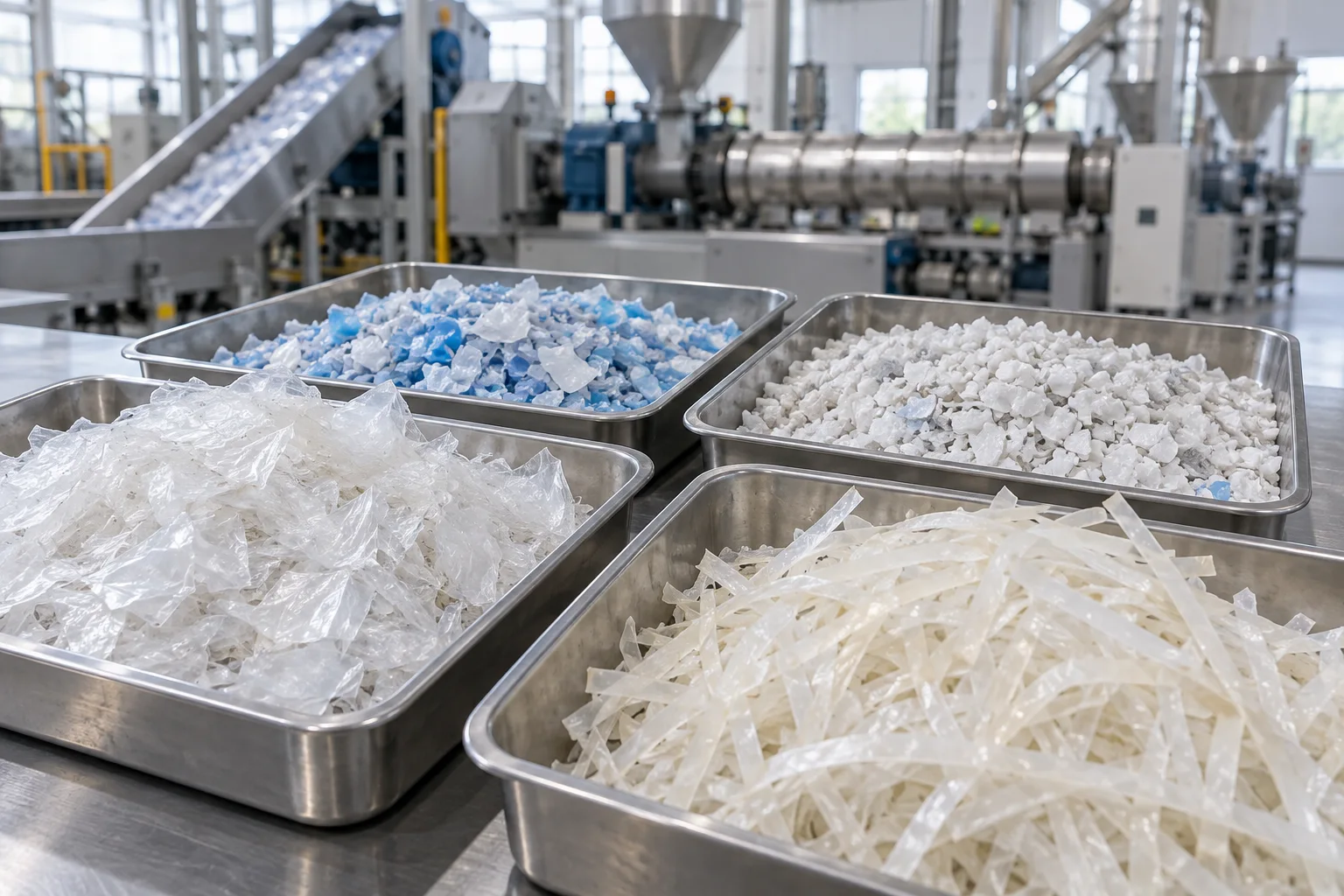
Feedstock
Washed Film
/ Flakes / Regrind
Prepared PE / PP film, HDPE or PP flakes, woven bag material and industrial regrind.
Plastic Pelletizing
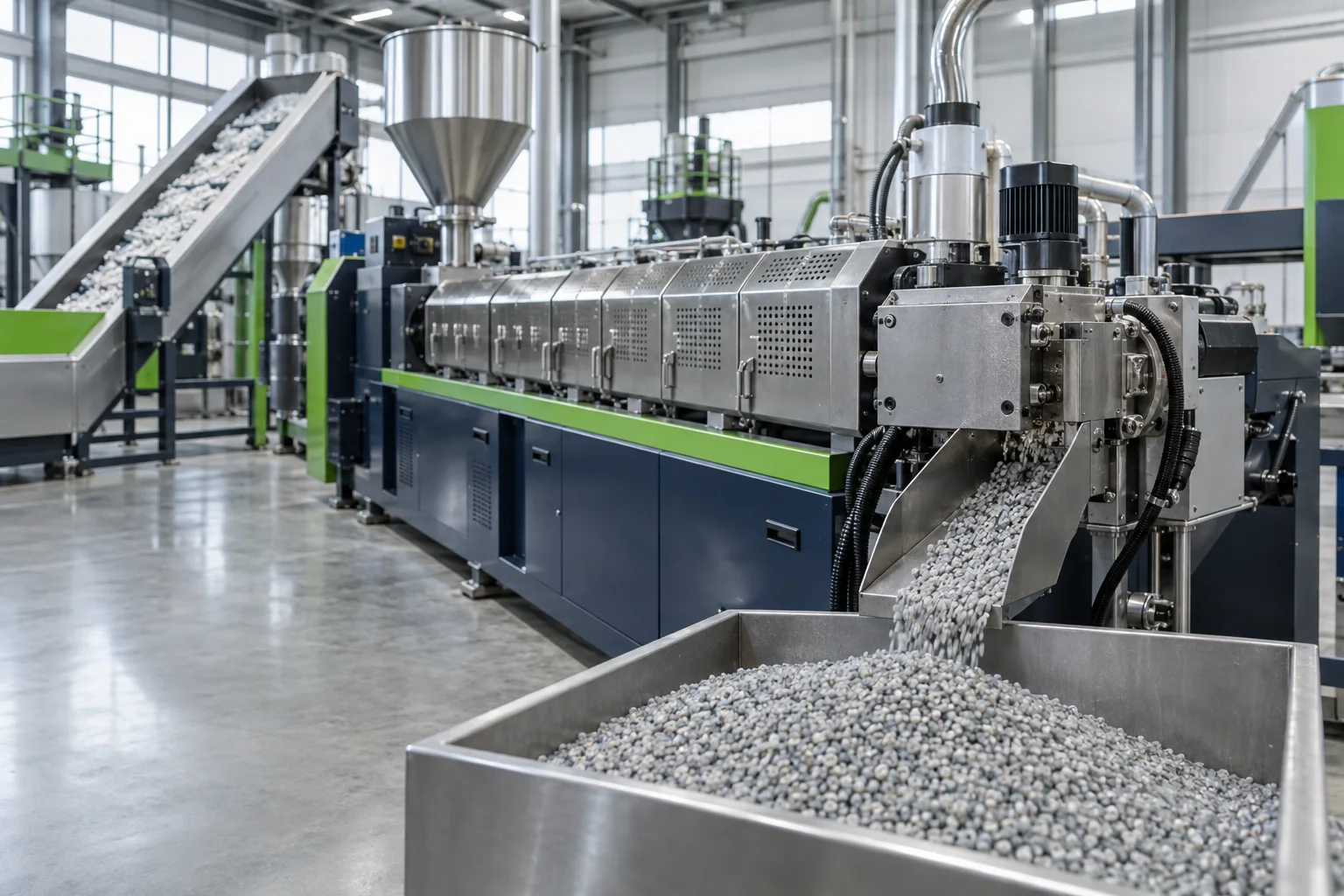
A complete extrusion and pelletizing system for converting washed plastic film, flakes and regrind into consistent recycled plastic pellets.
Designed for PE, PP, HDPE and other thermoplastic recycling applications.
AI concept visual · not a Rayli installation
From Recycled Material to Pellets
A stable pelletizing system controls feeding, melting, filtration, degassing and pellet formation to produce consistent recycled granules for downstream manufacturing.
AI concept
Feedstock
Prepared PE / PP film, HDPE or PP flakes, woven bag material and industrial regrind.
Plastic Pelletizing System
Controlled feeding, extrusion, melt filtration, degassing and pellet cutting transform prepared plastic into uniform granules.
 AI concept
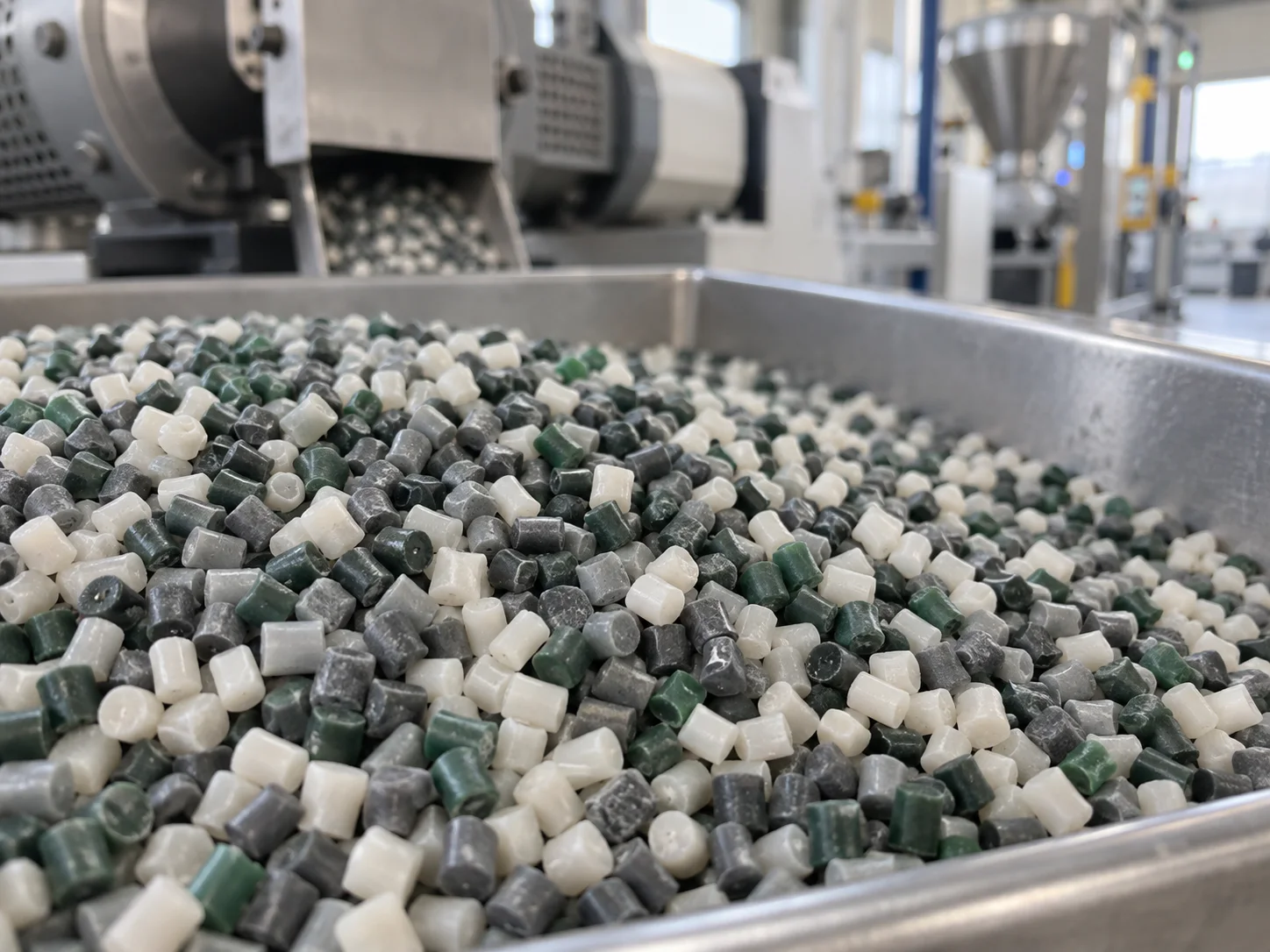
Final Output
Process Flow
Each stage helps stabilize material flow, remove unwanted contamination and create consistent recycled granules.
Prepared plastic material is introduced into the pelletizing system at a controlled rate.
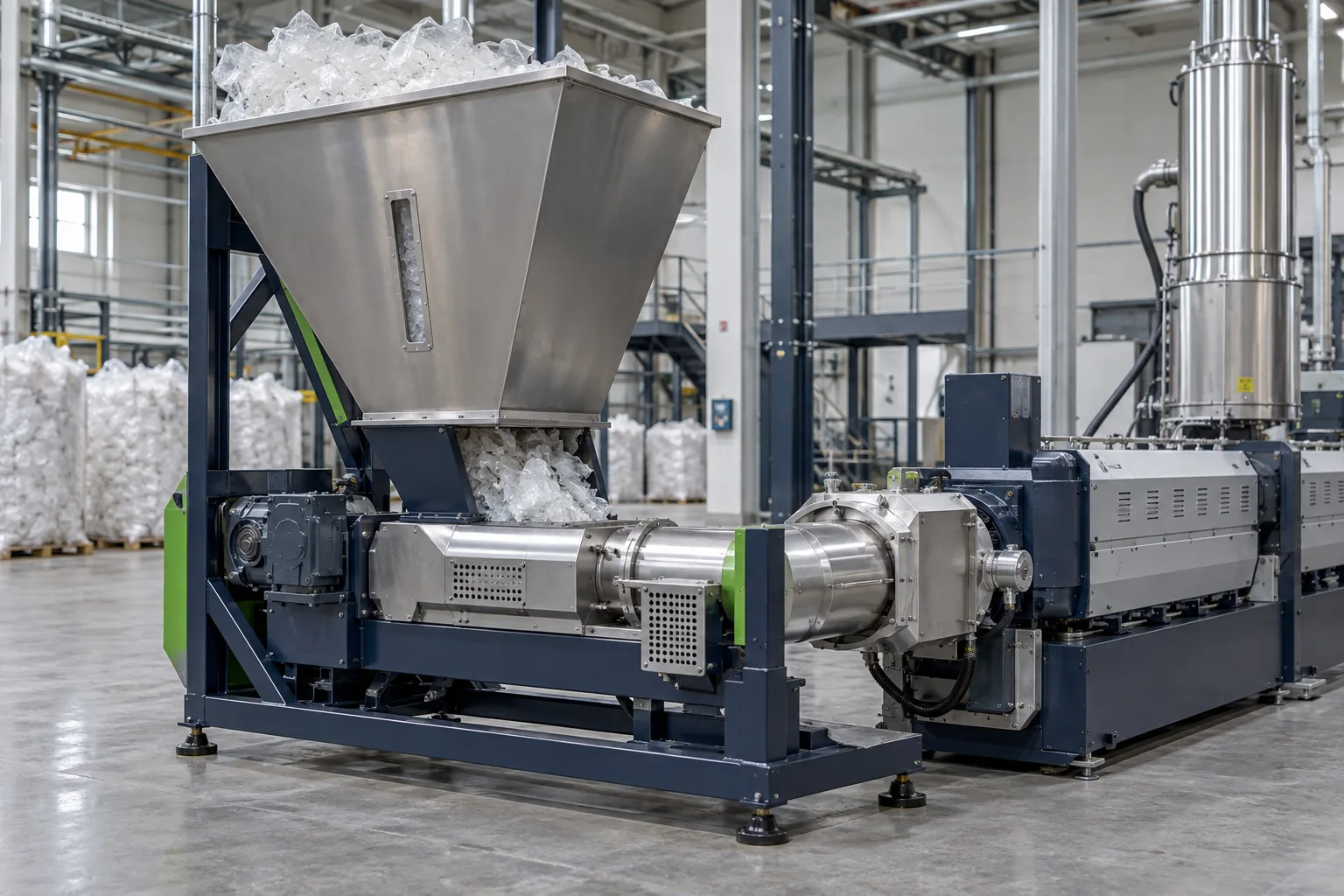
Low-bulk-density film and soft plastics are compacted or force-fed to maintain stable extrusion.
The material is heated, mixed and converted into a stable polymer melt inside the extruder.
Screens or filtration systems remove remaining solid contamination from the polymer melt.
Moisture and volatile gases are removed to support melt stability and pellet quality.
The filtered polymer melt is cut into consistent recycled plastic pellets.
Finished pellets are cooled and collected for storage, packaging or downstream production.
Feeding and extrusion configuration varies with feedstock form, bulk density, moisture and contamination.
Key Equipment
The final configuration depends on material form, moisture, contamination, throughput and required pellet quality.
 AI concept · not Rayli model
Stabilizes the feeding of film, flakes or low-bulk-density recycled material into the extruder.
View Equipment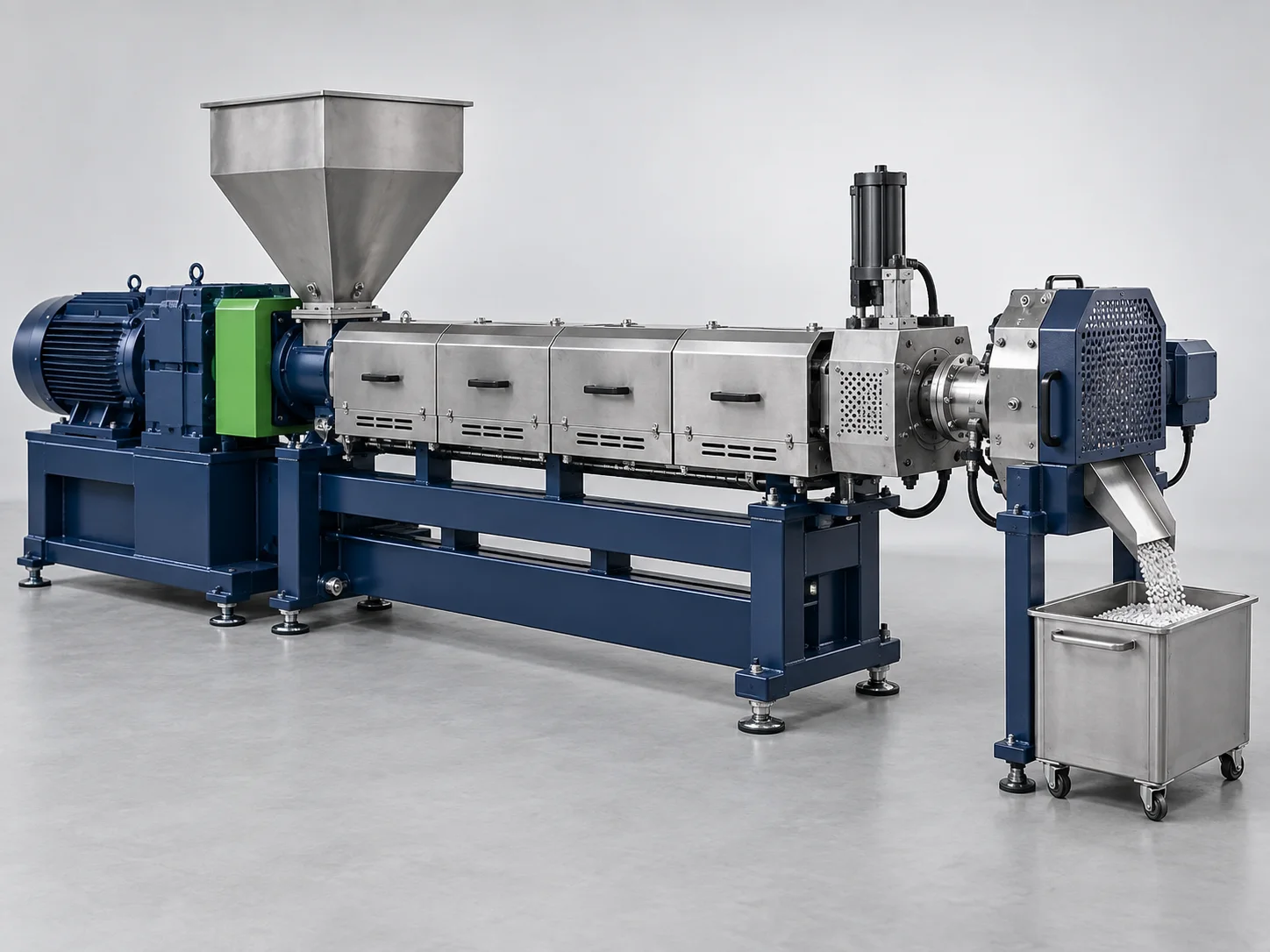 AI concept · not Rayli model
Melts and homogenizes recycled plastic under controlled temperature and pressure.
View Equipment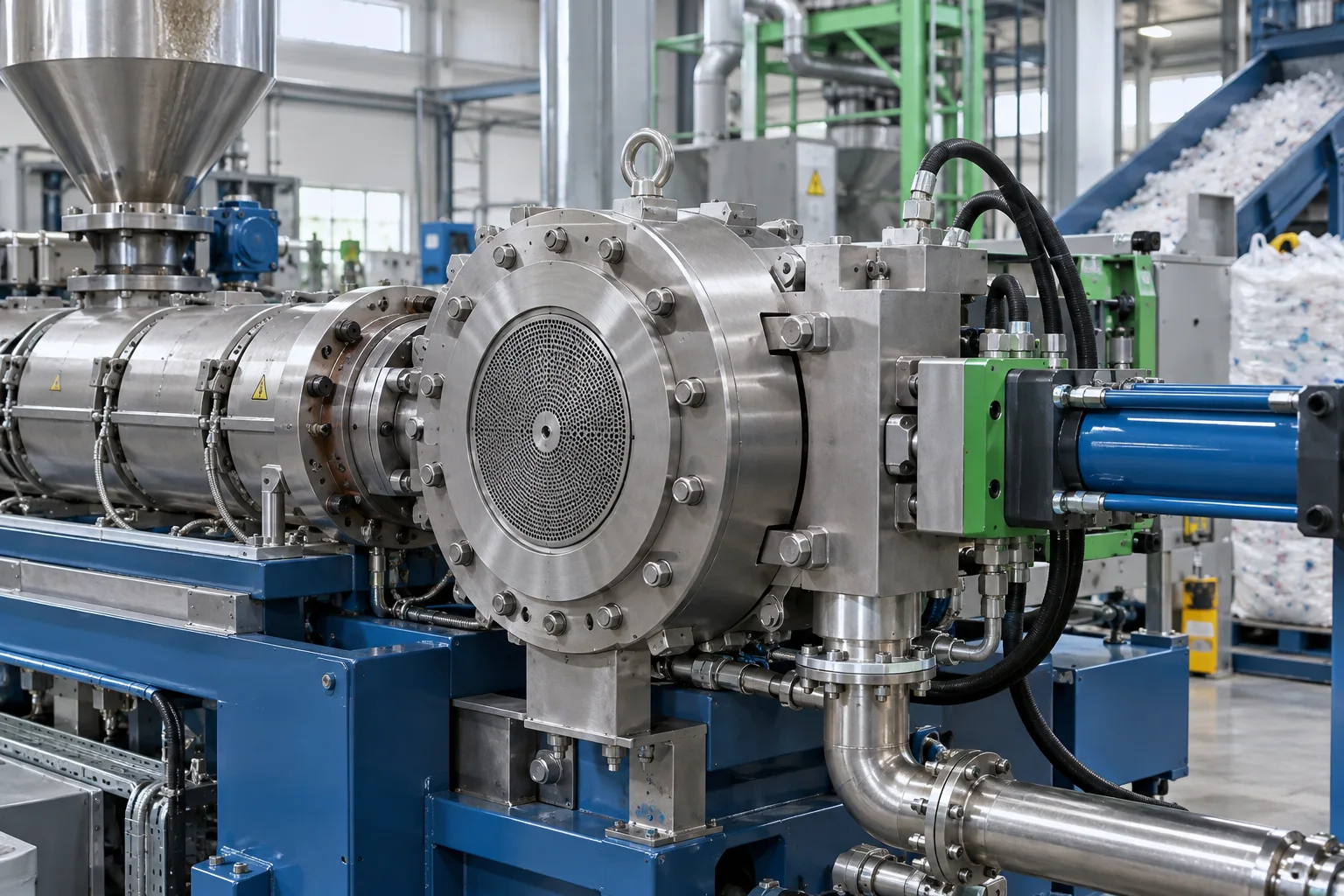 AI concept · not Rayli model
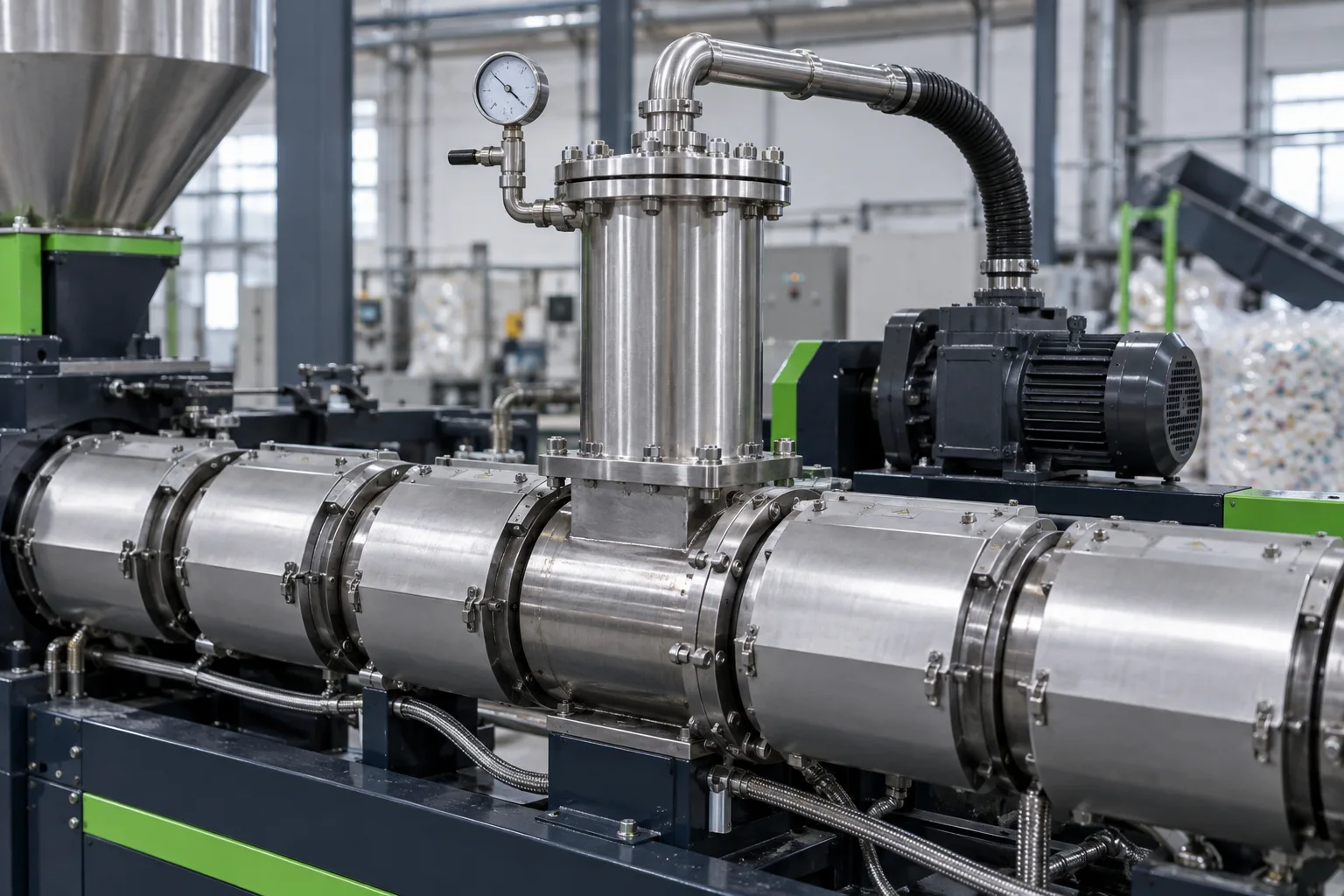 AI concept · not Rayli model
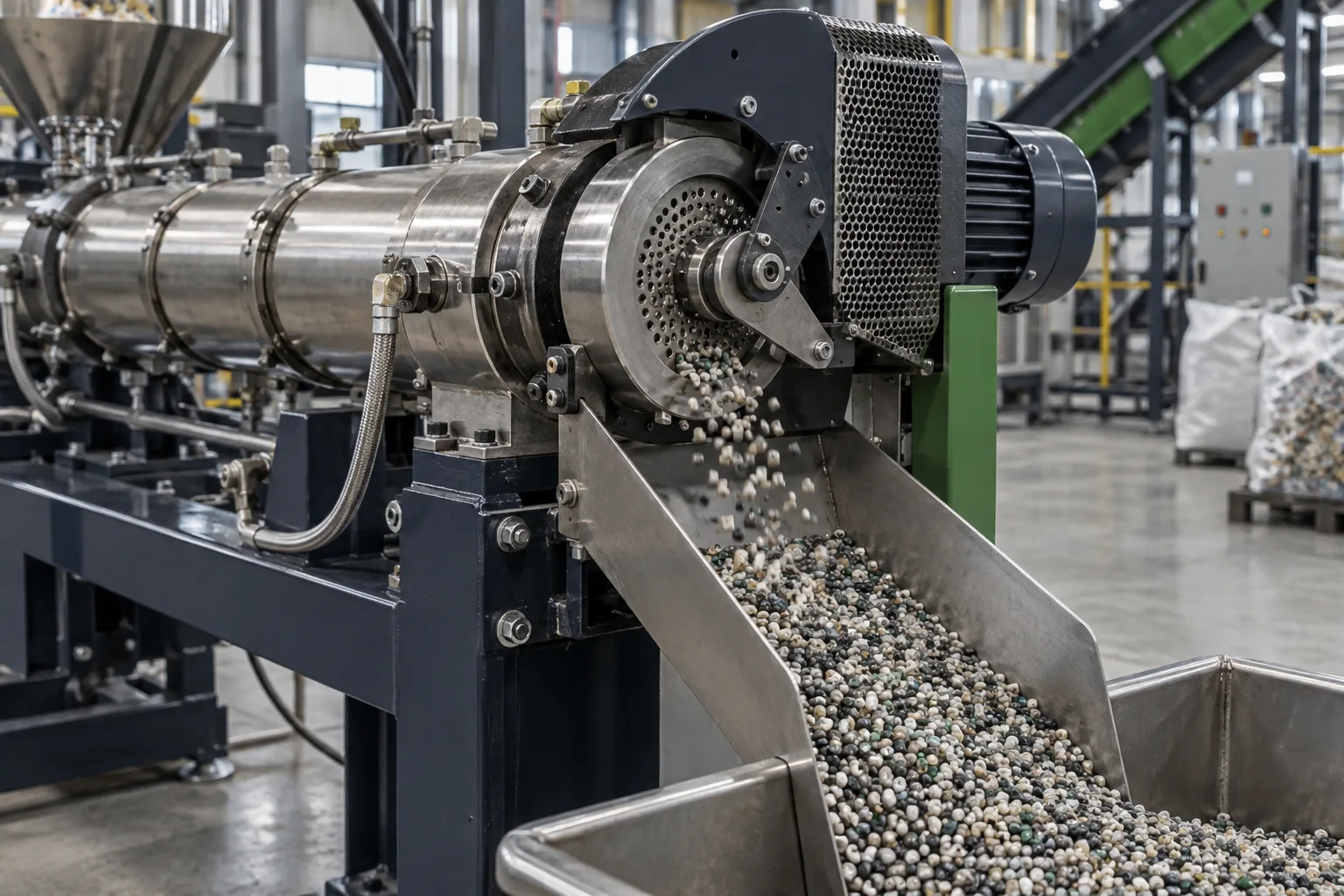 AI concept · not Rayli model
 AI concept · not Rayli model
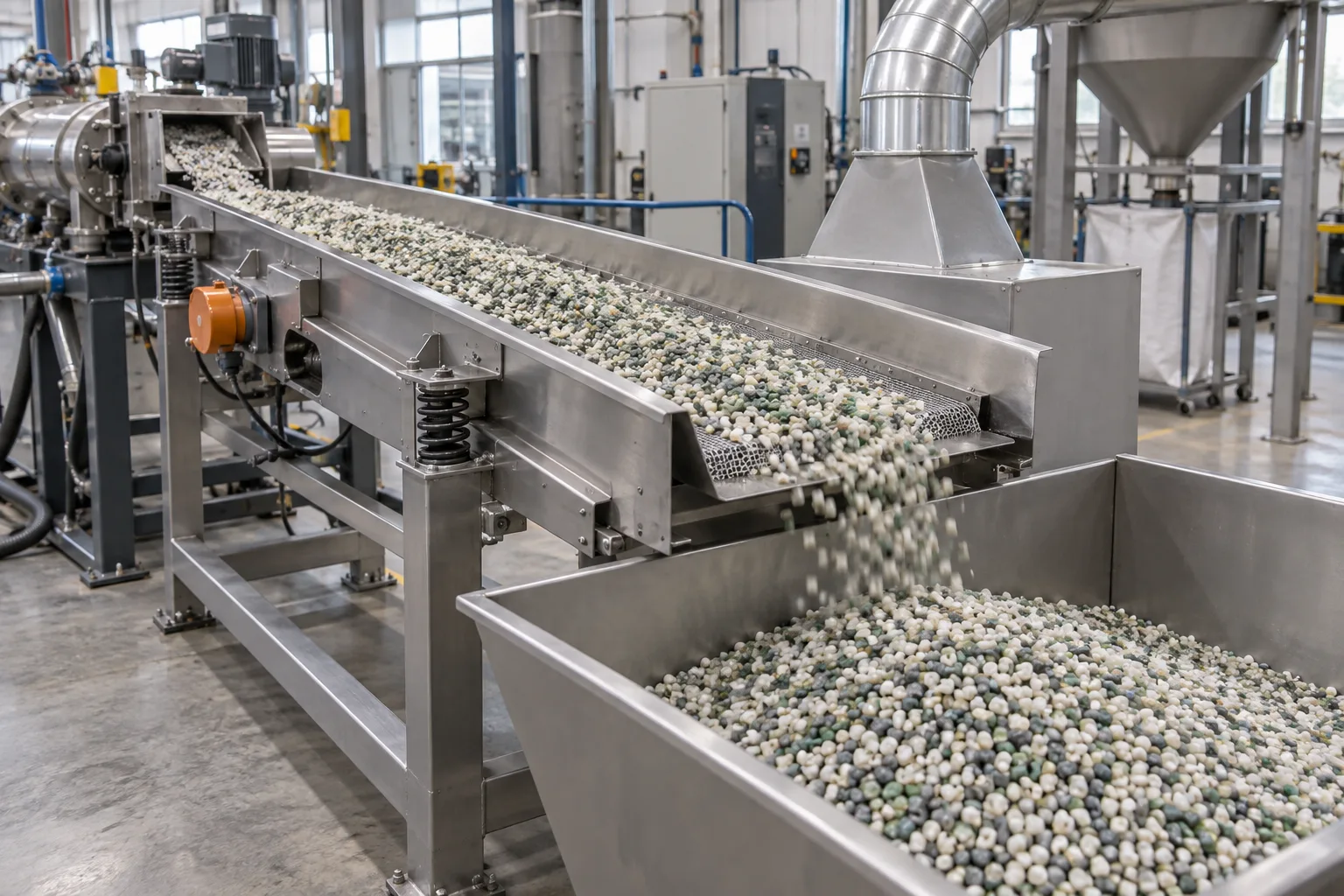
Cools, conveys and collects finished pellets for downstream handling.
View EquipmentPelletizing Configuration
Pelletizing performance depends on more than output capacity. Material form, bulk density, moisture and contamination all influence the correct configuration.
| Capacity | Typical Use | Configuration |
|---|---|---|
| 150–300 kg/h | Smaller recycling operations | Compact extrusion system |
| 300–500 kg/h | Commercial recycled material production | Standard pelletizing line |
| 500–800 kg/h | Higher-volume operations | Enhanced feeding + filtration |
| 800–1,500+ kg/h | Industrial recycling plants | Customized heavy-duty configuration |
Material FormLightweight film usually needs stronger compaction or force-feeding, while rigid HDPE / PP flakes use a different feeding and extrusion configuration.
Melt FiltrationFeedstock with more residual contamination may require a more robust melt filtration configuration; filtration performance depends on the material and setup.
Moisture ControlProper upstream dewatering and degassing help improve extrusion stability and final pellet consistency.
Capacity figures are planning ranges from the supplied brief; confirm actual output against Rayli equipment models and feedstock conditions.
Pelletizing Applications
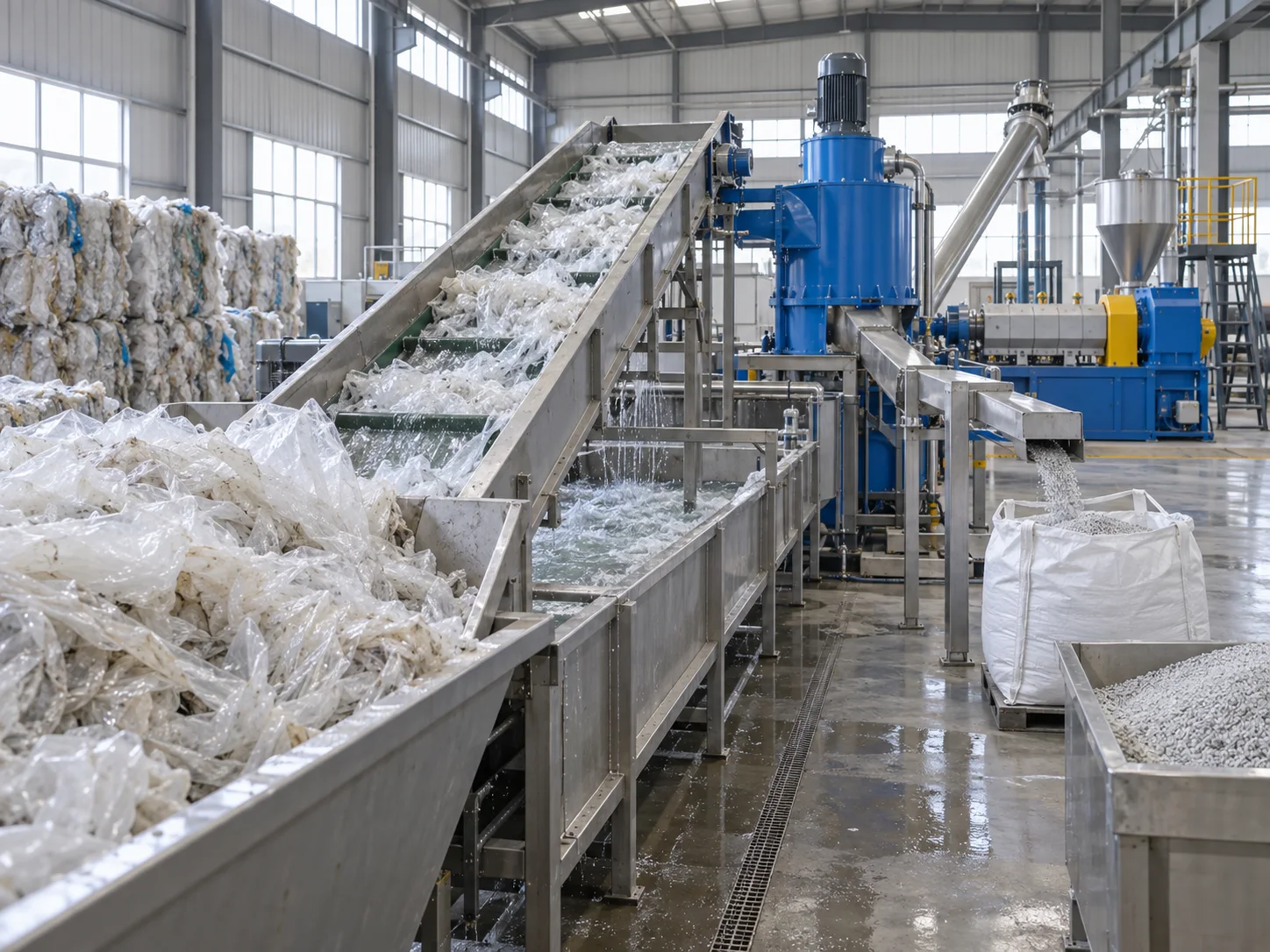
The supplied project brief identifies a PE film pelletizing line in Kenya. The image below is an AI concept, not project-site photography.
Kenya Project brief
The system was configured around PE film feedstock and the customer's required pelletizing capacity, with stable feeding, extrusion and pellet formation as key process requirements.
View All Recycling ProjectsPlan Your Pelletizing Line
Share your plastic type, feedstock form, current moisture condition, required capacity and target pellet application. Rayli will recommend a suitable pelletizing configuration.