
 AI concept materialHousehold Packaging
01 / HOUSEHOLD
Household Bottles
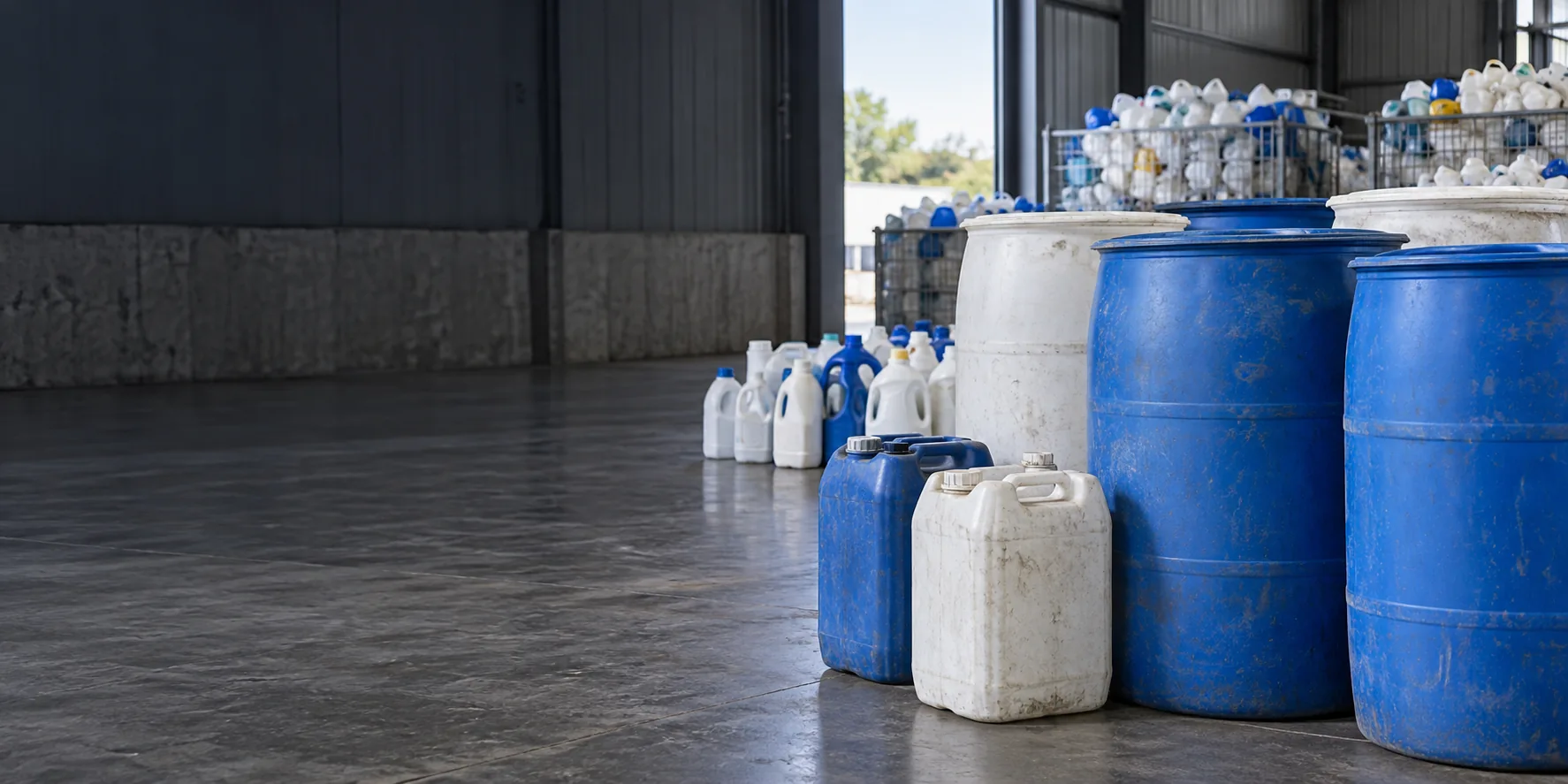
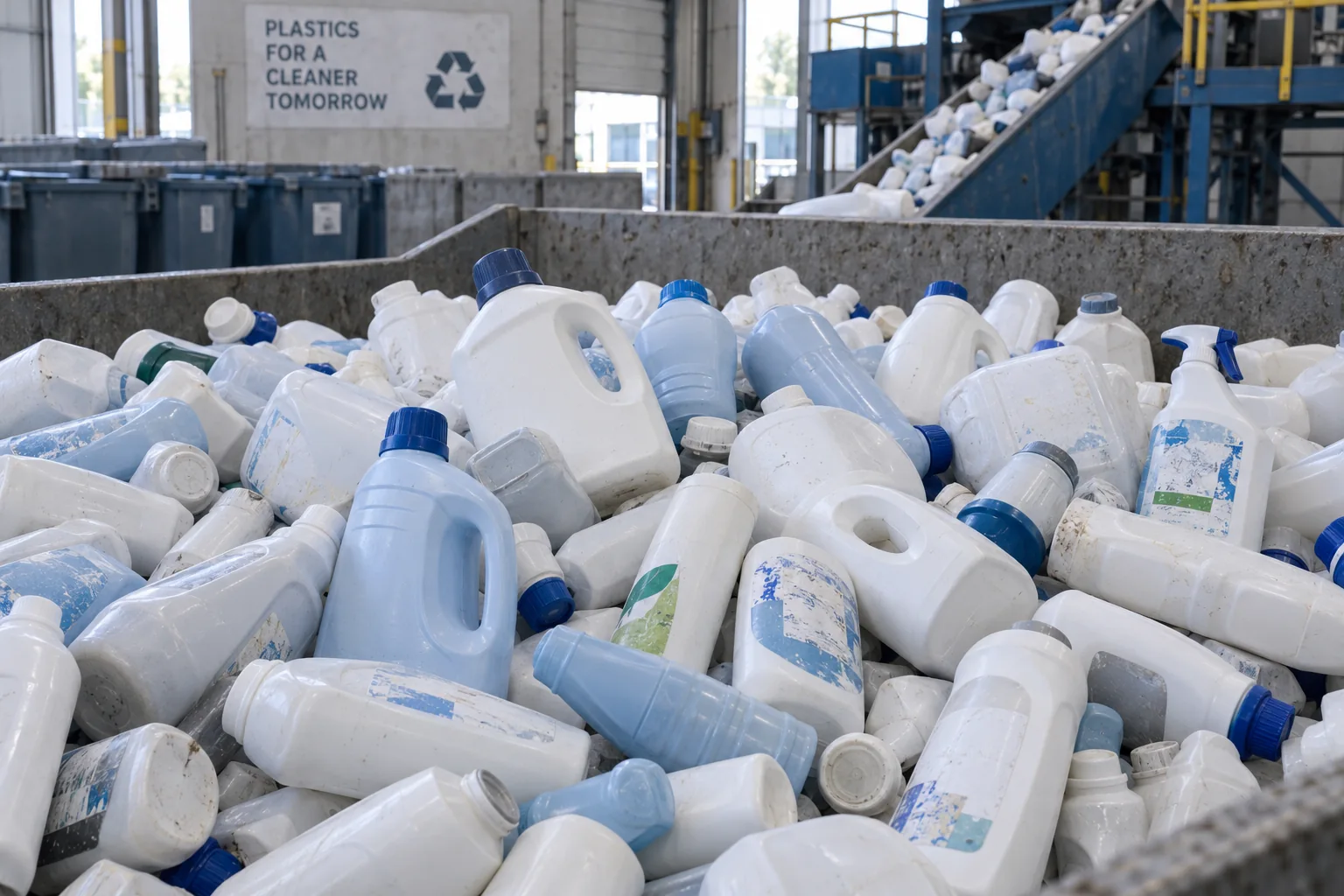
Smaller HDPE bottles are generally easier to feed and size-reduce than large drums, but labels and residual contents still affect washing requirements.
Rigid Plastic Recycling Material
HDPE bottles, drums and rigid containers vary widely in size, wall thickness and contamination, requiring the recycling process to be configured around the actual feedstock condition. The material can be processed into clean HDPE flakes or further pelletized for downstream reuse.
AI concept material · illustrative feedstock, not a Rayli sample
Material Profile
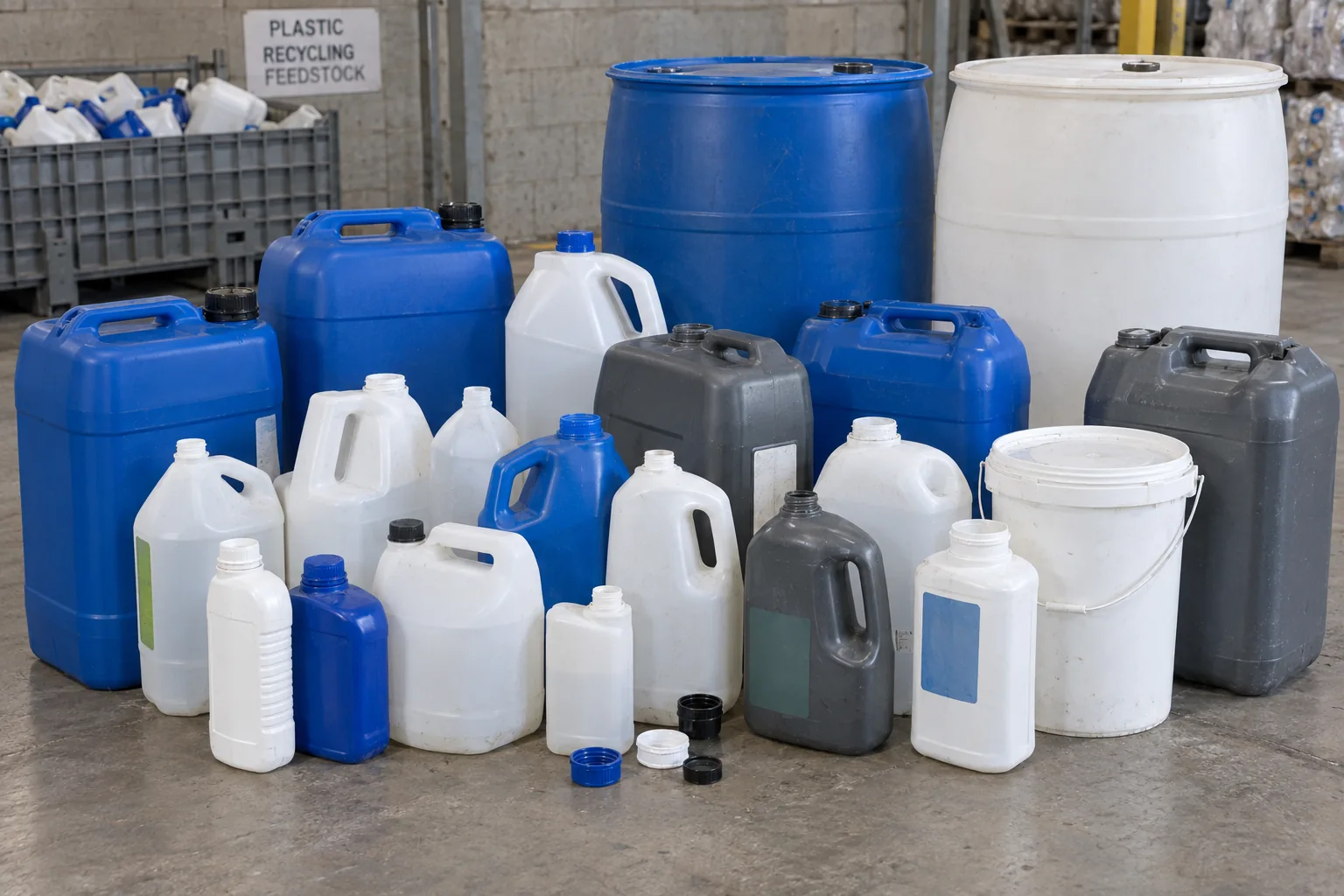
HDPE recycling feedstock ranges from small household bottles to large industrial drums, with different requirements for feeding, size reduction and washing.
AI concept materialHousehold Packaging
01 / HOUSEHOLD
Smaller HDPE bottles are generally easier to feed and size-reduce than large drums, but labels and residual contents still affect washing requirements.
 AI concept materialMedium Containers
02 / MEDIUM SIZE
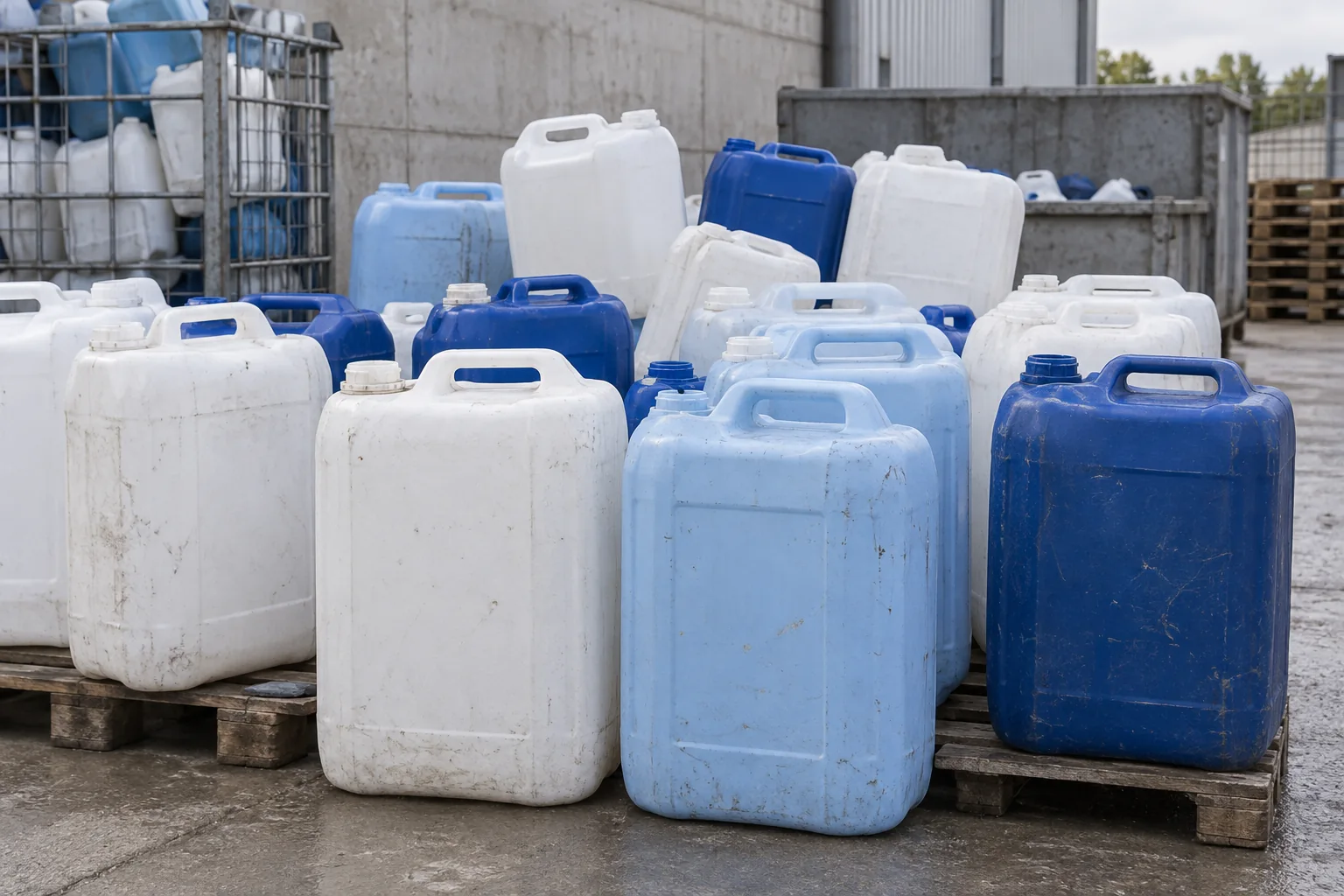
Medium-sized rigid containers may combine larger dimensions with thicker walls and variable contamination.
 AI concept materialBulky / Thick-Walled
03 / LARGE FORMAT
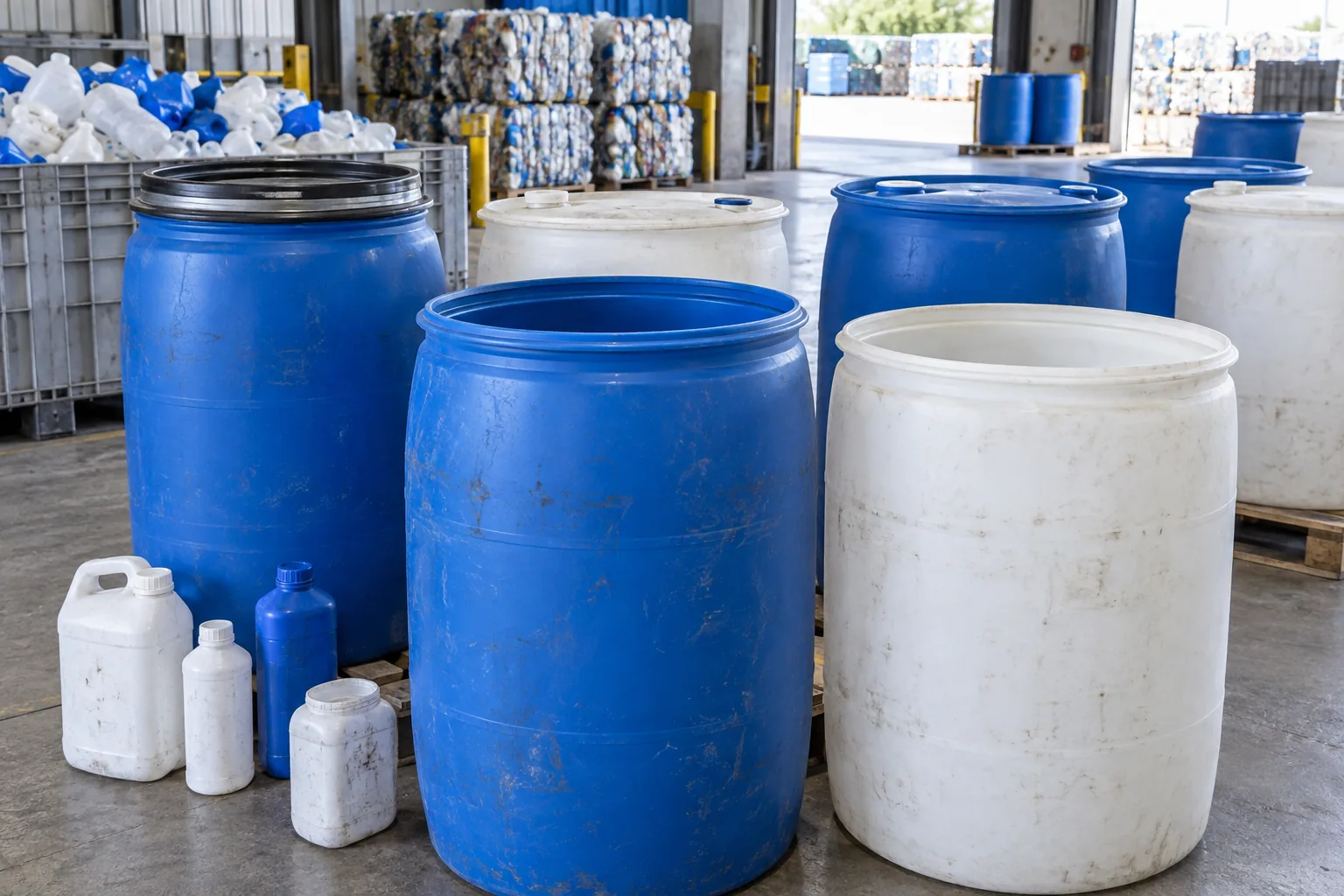
Large drums can require primary shredding before crushing to maintain stable material feeding and downstream processing.
 AI concept materialMixed Feedstock
04 / MIXED STREAM
Mixed feedstock may contain different colors, caps, labels, sizes and contamination levels that should be evaluated before line configuration.
Typical HDPE Stream
HDPE is a polymer type; it does not mean every container stream needs the same recycling configuration.
Recycling Challenges
Container size, wall thickness, contamination and mixed components all influence the required size-reduction and washing configuration.
AI concept material
Large drums and thick rigid containers may be difficult to feed directly into a standard crusher.
Labels, closures and other components can introduce different materials into the recycling stream and may require separation.
Used containers may carry detergent, oil, industrial residue, dirt or other contamination that changes the washing requirement.
Different colors and feedstock conditions can influence the value and downstream application of the recycled material.
Engineering NoteA small HDPE bottle and a large industrial drum may be made from the same polymer, but they can require very different feeding and size-reduction configurations.
Previous ContentsThe previous contents of industrial containers should be identified before the recycling process is configured.
Material AcceptanceContainers with unknown, hazardous or incompatible residues require separate evaluation before processing.
Target Output
Depending on the production goal, recycled HDPE can leave the process as clean flakes or continue into pelletizing.
For customers supplying washed flakes to a downstream production step.
AI concept material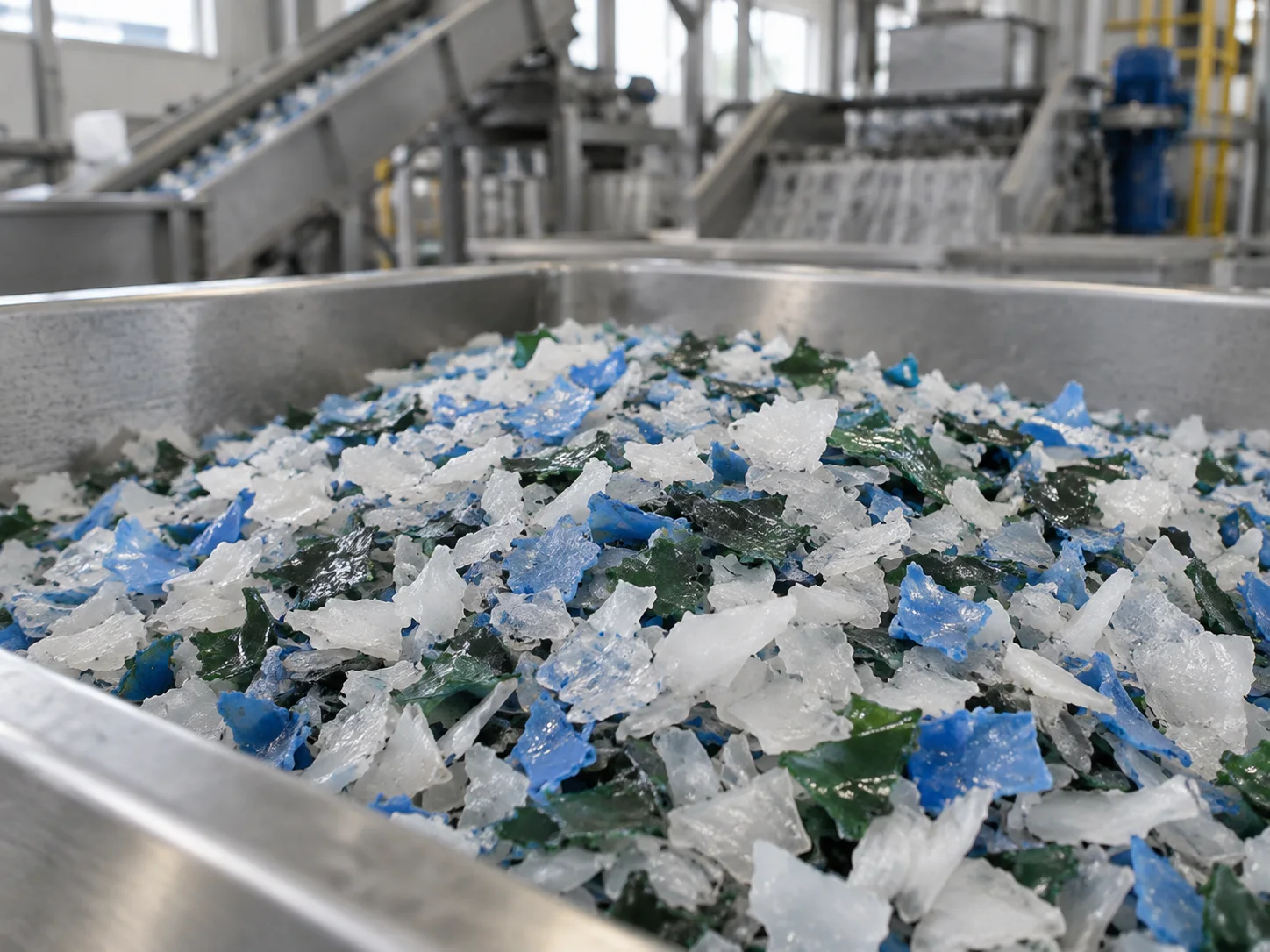 AI concept output
Flake appearance and downstream application depend on feedstock condition and the configured process.
For customers who want to continue from washed flakes into pelletizing.
AI concept material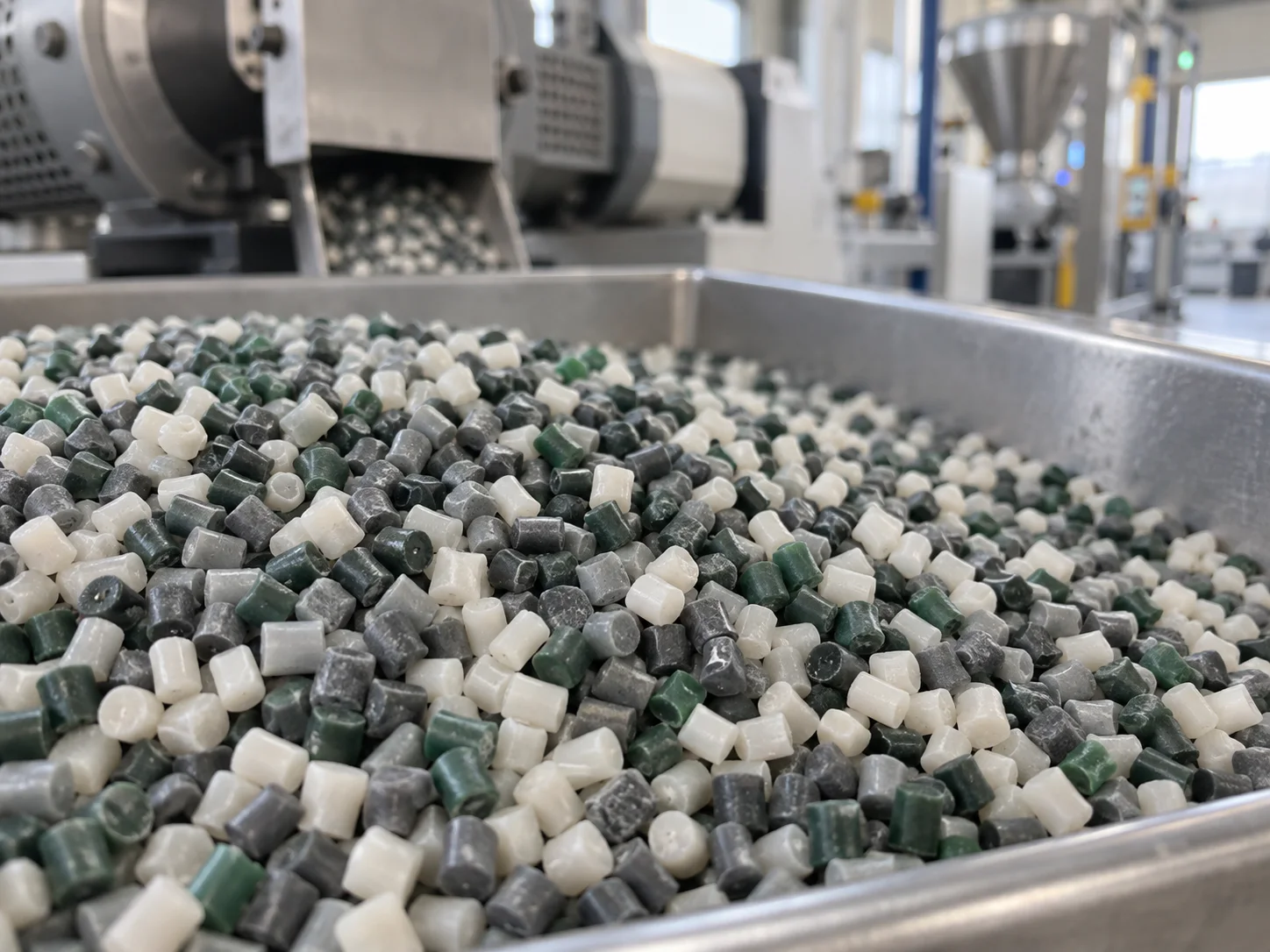 AI concept output
Pellet characteristics depend on feedstock, process configuration and the customer's requirements.
The target output should be confirmed before the complete line is designed because pelletizing requires additional moisture control and extrusion stages.
Recommended Recycling Route
Rayli configures the recycling route according to container size, wall thickness, contamination, required throughput and target output.
Assess the container stream and prepare it for stable feeding.
Match size reduction to bottle, jerry can or drum dimensions.
Address contamination and separate unwanted components.
Reduce moisture before flakes are collected or pelletized.
Choose the stopping point based on the target output.
Start with the complete rigid-plastic route
Explore a line configured around your container size, condition and target output.
Plan Your HDPE Recycling Project
Share your container type, approximate size, previous contents, contamination condition, required capacity and target output. Rayli will recommend a suitable HDPE recycling configuration.
Photos of the containers, labels and residual contamination are helpful. Include approximate dimensions for large drums.