Define what clean means for your buyer
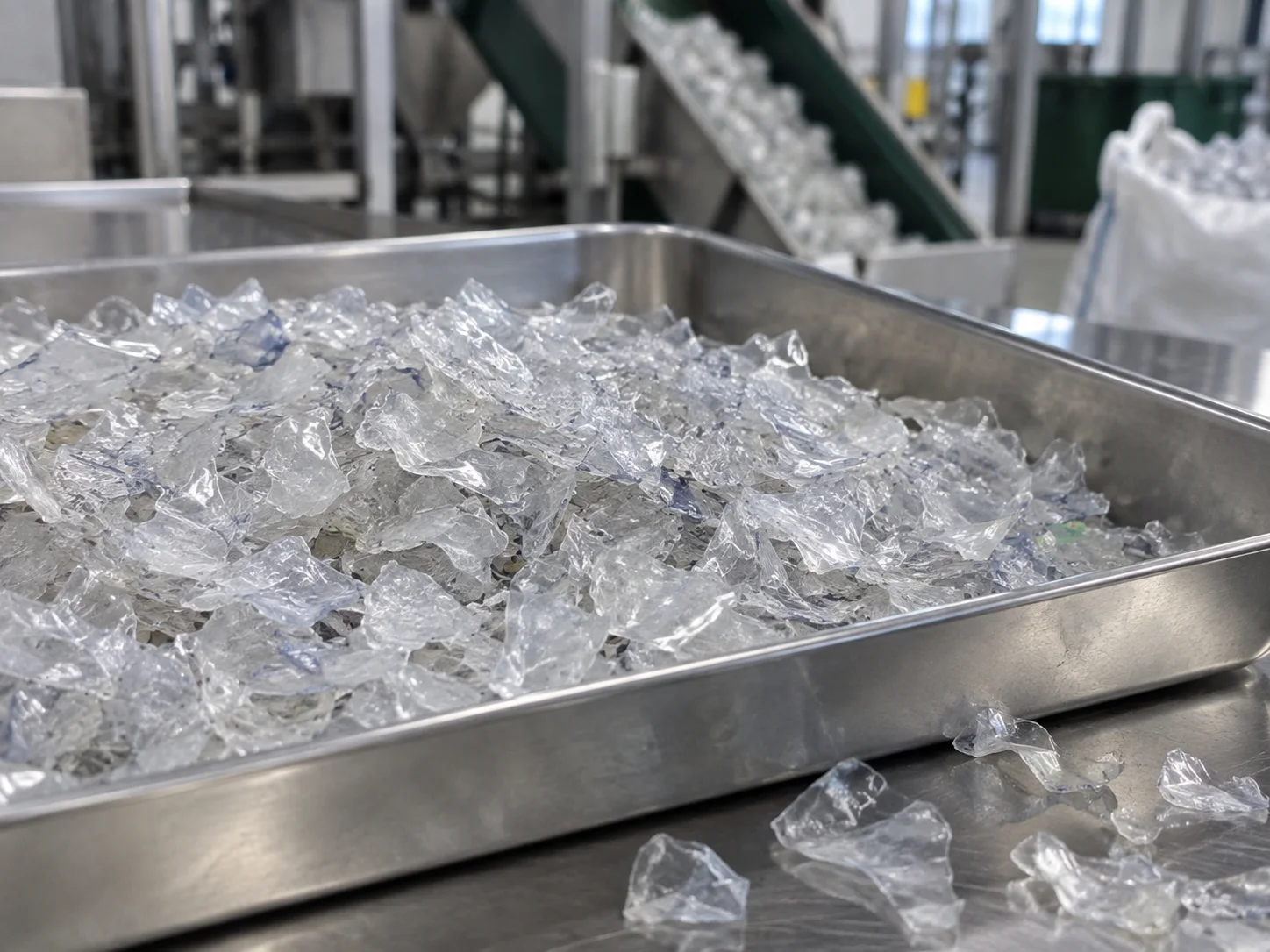
Flake quality should be discussed against the intended next use. Describe acceptable material composition, colour, particle size, remaining contamination and moisture. Agree the evaluation method with the receiving process or buyer before comparing washing configurations.
Review the incoming material
Record polymer mixing, labels, residues and visible foreign materials at the start of the process. Variation between batches can change the cleaning requirement. Photos are helpful, but representative samples give the technical discussion a clearer basis.
Connect sorting, washing and separation
The outlet condition reflects the work done across the line. Preparing the incoming stream, addressing its contaminants and confirming the output are connected tasks. A single machine or a bright-looking photograph cannot establish whether the flakes meet the agreed specification.
Create a repeatable evaluation plan
- Document where and when samples are collected.
- Record the incoming material used in the evaluation.
- Use the same agreed measurement and acceptance criteria.
- Keep batch records so that changes can be investigated.
Explore the PET bottle solution or rigid plastic solution for a material-specific discussion.
Further reading
Plastics Recyclers Europe: how mechanical recycling works introduces the linked preparation and recycling stages.