
Compare the process jobs
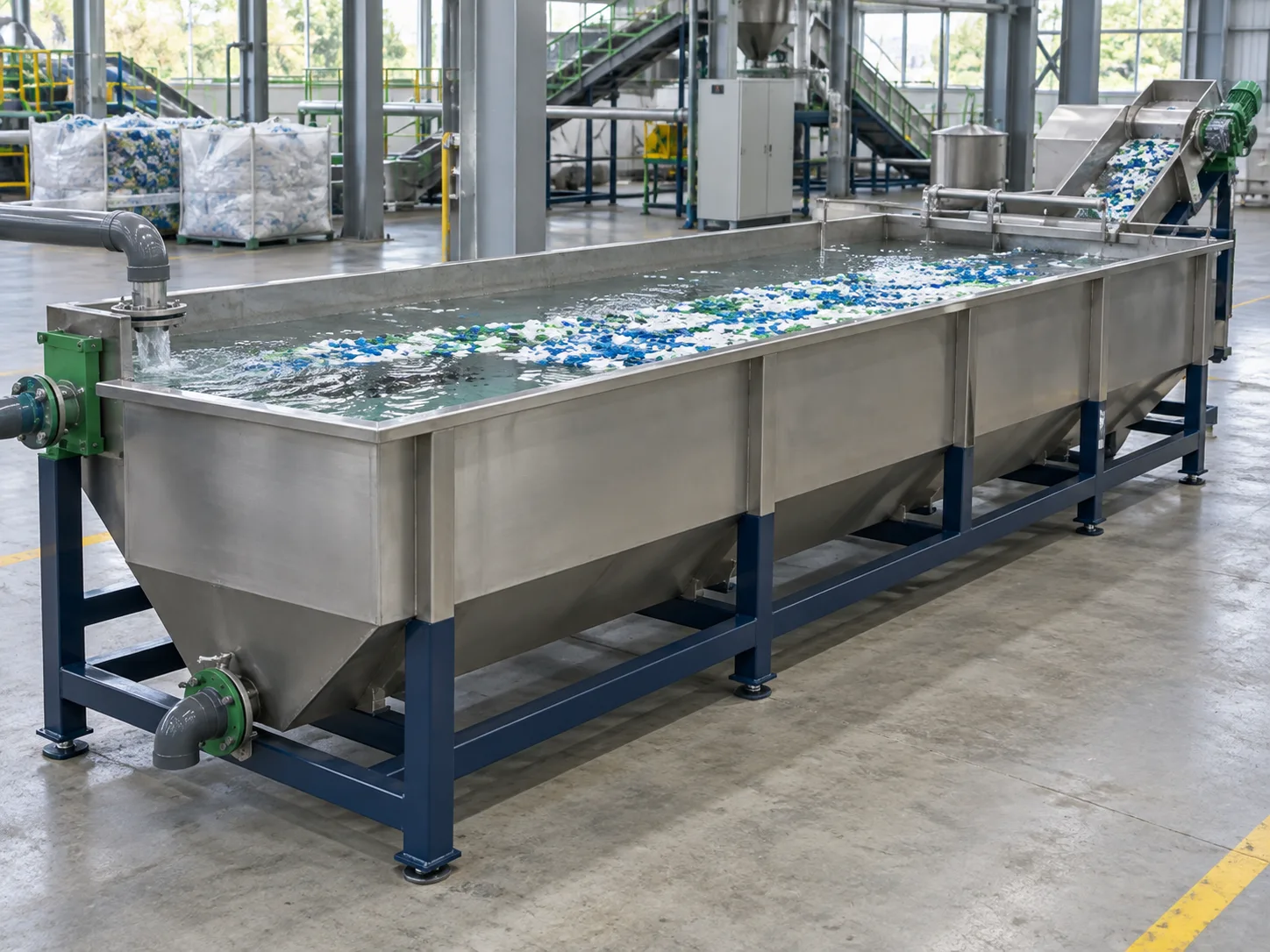
A friction washer and a float-sink tank serve different purposes in a washing configuration. The friction-washing discussion focuses on mechanical surface cleaning. A float-sink separation discussion focuses on how materials behave in the separation medium. The selected arrangement may need both functions.
Identify the contaminants first
Describe what must be removed: surface dirt, attached residue, labels or unwanted material mixed into the stream. This helps distinguish a cleaning requirement from a separation requirement. Equipment selection should follow those process jobs and the required outlet condition.
Confirm the separation assumptions
Density separation relies on differences in material behaviour in the selected medium. It should not be assumed to remove every unwanted polymer or contaminant. Ask the supplier to explain which material fractions the proposed stage is intended to separate and how performance will be evaluated with a representative sample.
Evaluate the combination as a line
- Specify the material condition entering each stage.
- Discuss transfer between cleaning and separation equipment.
- Document water management and material recovery arrangements.
- Agree the output quality and sample evaluation method.
Explore washing equipment and the applicable recycling solution.
Further reading
Plastics Recyclers Europe: how mechanical recycling works outlines washing and density separation.