
The names alone do not tell you which machine belongs in a recycling line. The practical question is whether the incoming plastic can be fed reliably into a finer cutting stage, or whether it first needs a separate primary reduction step. Start with a representative sample and the required next-stage material, then assess the machine arrangement around those conditions.
What Is a Plastic Shredder?
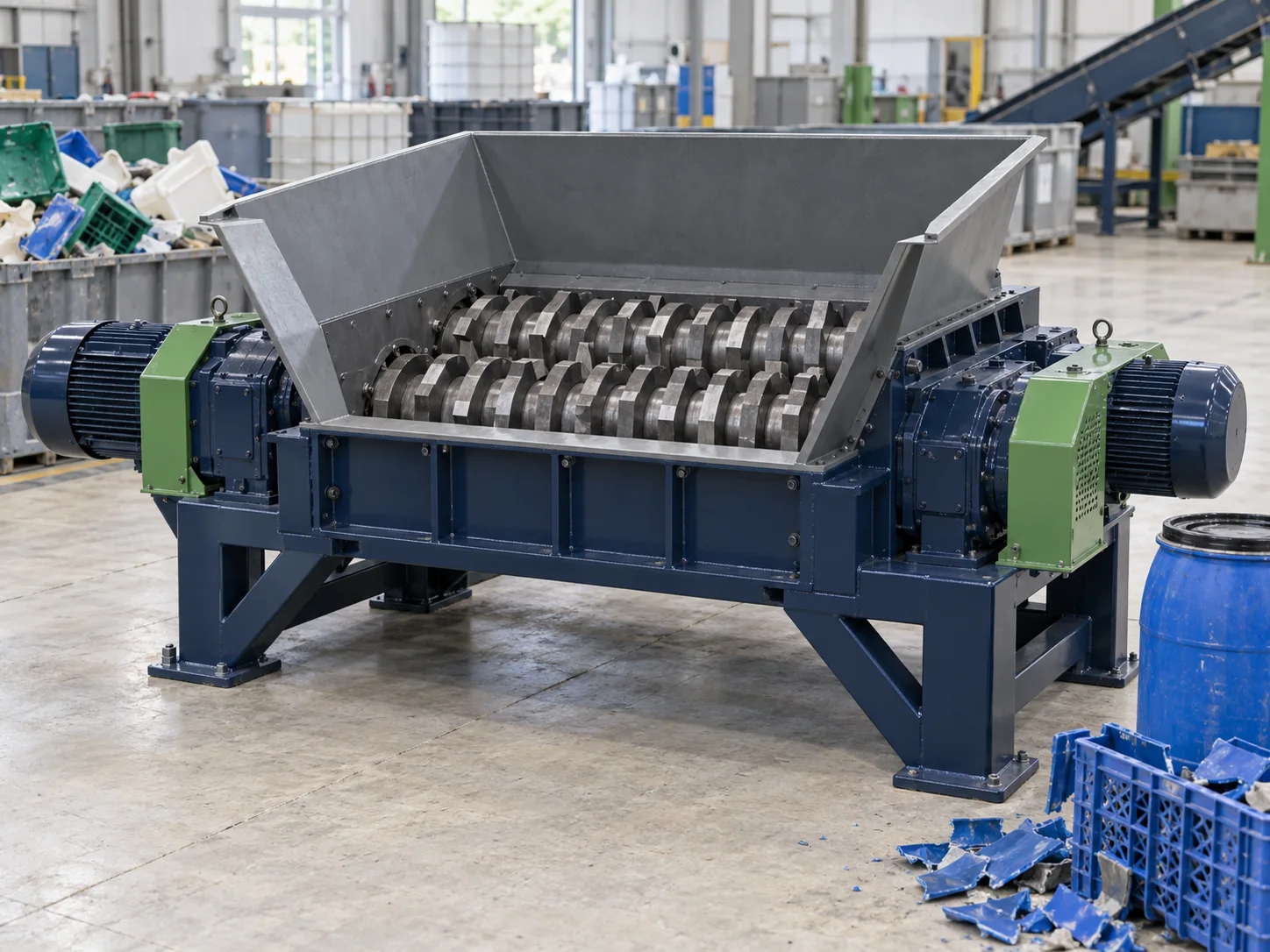
A plastic shredder is commonly used for primary size reduction. It is considered when the incoming material is large, bulky, irregular or difficult to feed directly into a smaller cutting machine. Typical examples may include thick rigid parts, large containers, pipe sections, purgings or mixed bulky scrap; the actual suitability depends on the machine design and the material.
Shredders often use a slower, high-torque cutting action, but this is a general description rather than a specification for every model. Rotor arrangement, cutter geometry, feed system and control strategy vary. The resulting pieces are intended to make material easier to handle or suitable for the next stage; their size and shape should not be assumed without reviewing the configuration.
What a shredder changes
The first stage changes the feedstock from pieces that may be awkward to convey or feed into a more manageable form. This can help prepare material for further size reduction, sorting, washing or another process. A shredder does not automatically produce a uniform final flake, and it is not a substitute for the later stages needed to meet a specific output requirement.
The same polymer can behave differently in a line when its dimensions, wall thickness, shape, contamination or consistency change. Evaluate the actual feedstock rather than choosing from the material name alone.
What Is a Plastic Crusher?
A plastic crusher, often called a granulator in some markets, is used to cut plastic into smaller regrind or flakes. It is typically considered when the feed can be introduced consistently and its size is suitable for the selected machine. The cutting chamber, rotor and screen arrangement influence the output; the exact result depends on the material and machine configuration.
Crushers are often used after a preparation step when a line needs smaller pieces for conveying, washing or a later process. Some feedstocks can enter a crusher directly. Others may be too large, bulky, tangled or inconsistent and need a different preparation stage first.
What a crusher changes
A crusher reduces prepared plastic into smaller pieces. A screen can help control the material that passes through, but the actual size distribution and throughput depend on more than the screen opening. Cutter condition, feed characteristics and operating setup also matter, so a catalog description alone cannot confirm the output for a particular project.
AI concept
How Do Shredders and Crushers Differ?
The distinction is about the job each stage is asked to do, not a universal boundary between two machine labels. In many applications, a shredder handles primary reduction and a crusher creates smaller pieces afterward. In other lines, one machine may be enough. Compare the feed conditions and desired next-stage material before deciding.
| Factor | Shredder | Crusher |
|---|---|---|
| Common role | Primary size reduction of bulky or difficult feedstock | Finer size reduction of material that can be fed consistently |
| Typical feed condition | Large, irregular or thick pieces may be considered | Prepared pieces within the selected machine’s feed limits |
| Typical process position | Often earlier in a line | May follow preparation or a shredder |
| Output | Manageable reduced pieces; size depends on configuration | Smaller regrind or flakes; size distribution depends on setup |
| Key decision | Can the incoming material be fed and reduced reliably? | Can this machine accept the feed and meet the next-stage need? |
These are typical roles, not performance promises. Machine naming can also vary between suppliers. When comparing proposals, ask each supplier to define the intended feed condition, process role, output form and any downstream equipment that depends on it.
When Does a Recycling Line Need a Shredder?
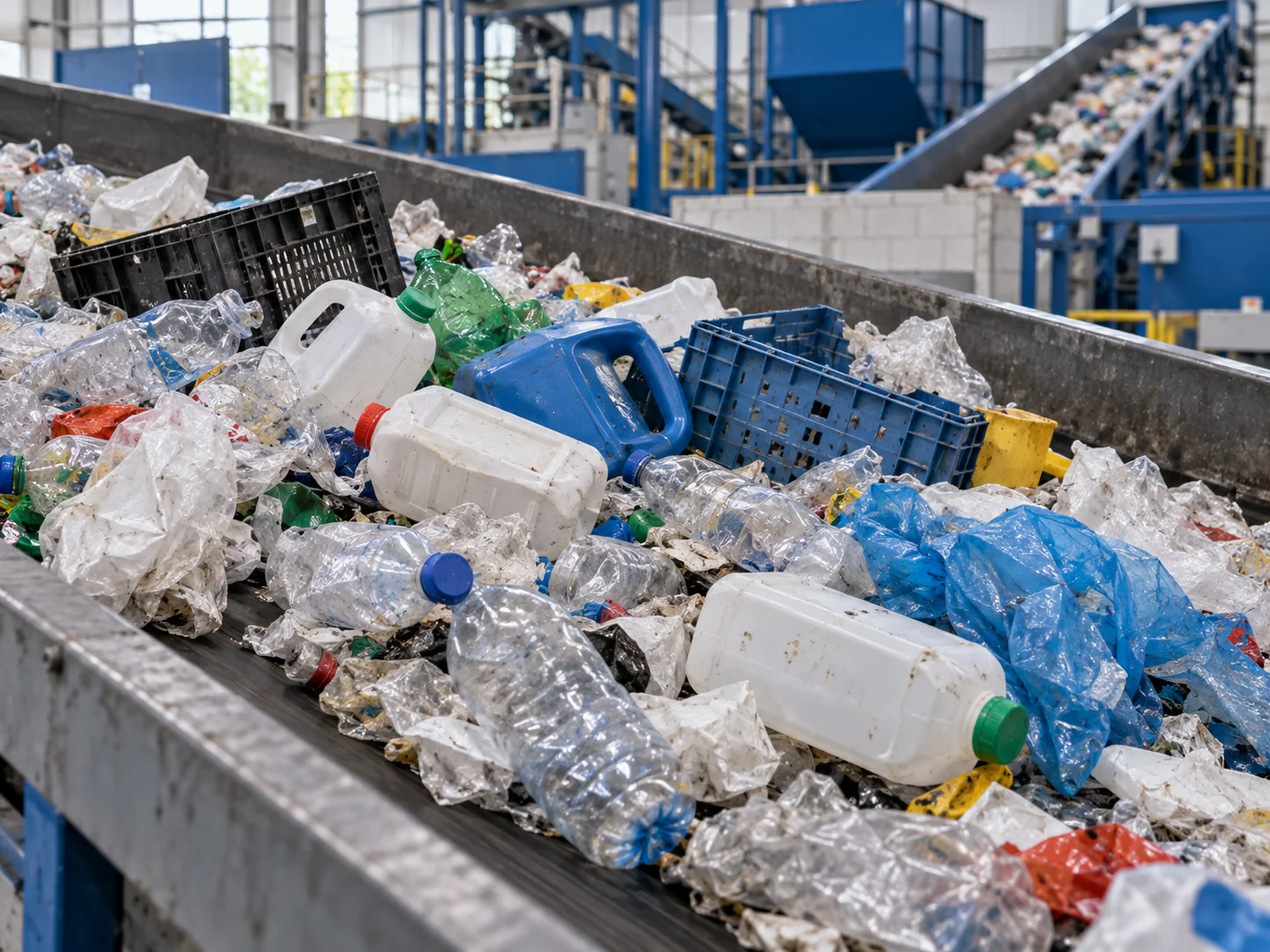
Consider primary shredding when incoming plastic is too large or awkward to feed into the next machine as supplied. Thick sections, bulky containers and irregular production scrap may need an initial reduction step. A shredder can also be considered where more controlled handling of difficult feed is needed, subject to the machine’s design and safeguards.
Before specifying a shredder, check the largest feed dimensions, wall thickness or section profile, how material will be loaded, and whether the feed includes metal or other unwanted items. Confirm what the next stage requires. Adding a machine without a clear process purpose can add floor space, maintenance and transfer points without solving the actual bottleneck.
- The material is bulky or difficult to feed into a finer cutting chamber.
- Primary size reduction is needed before sorting, washing or crushing.
- Feed dimensions vary enough to affect stable handling.
- The next machine has a defined feed-size or feeding constraint.
These are prompts for evaluation, not automatic rules. A material trial or engineering review may show that a different machine sequence is more appropriate.
When Is a Crusher Enough?
A crusher may be sufficient when the feedstock is already within the selected machine’s feed range and can be supplied consistently. For example, some production scrap or pre-sized rigid plastic can be considered for direct crushing. The decision should still account for the material’s shape, thickness, condition and the required output for the next process.
If material bridges at the hopper, arrives in pieces that are too large, or feeds unevenly, direct crushing may not be suitable. Conversely, a separate shredder stage should not be added simply because it is common elsewhere. The correct sequence is the one that handles the actual feed while supporting the downstream process requirements.
Ask the supplier to explain what sample condition the proposed crusher assumes and what changes if the feed varies. Where output size or uniformity matters to a downstream step, confirm those expectations through a material review or agreed trial rather than relying on a machine label.
When Are Both Machines Used?
A line may use a shredder followed by a crusher when bulky feed needs primary reduction and the downstream process calls for smaller, more consistent pieces. The first machine makes the material more manageable; the second performs a finer reduction. Whether both stages are required depends on feed characteristics, required output, process layout and the selected equipment.
BULKY OR IRREGULAR FEED
- 01Primary reductionShredder may be considered
- 02Review piece sizeCheck what the next stage needs
- 03Finer reductionCrusher if required by the process
PREPARED, MANAGEABLE FEED
- 01Feed reviewConfirm machine feed limits
- 02Size reductionCrusher may be considered directly
There is no universal rule that every rigid-plastic line needs both machines. If a shredder already prepares the material for the next stage, an additional crusher may not be needed. If incoming pieces can be handled directly and the required size reduction is achieved, a shredder may not add value. Review the full sequence, including conveying and washing, as one system.
How Should You Choose for Your Feedstock?
A useful first conversation starts with a clear description of the material and what the next process must receive. Provide representative photos and, where practical, samples. Include both typical and difficult material so that the proposed route is not based on an unusually clean or easy batch.
Information to prepare
- Polymer type where known, and whether the feed is single-polymer or mixed.
- Typical and maximum piece dimensions, wall thickness or product profile.
- Feed condition, including loose, baled, bundled, tangled or mixed forms.
- Contamination or foreign items that could affect feeding or cutting.
- Available material quantity and expected operating pattern, if confirmed.
- Required next-stage material and the process that follows size reduction.
- Site constraints such as loading method, transfer distance and available layout.
Capacity should be discussed with the actual material and operating conditions. Avoid comparing two machine quotations by nominal capacity alone if their feed assumptions differ. Ask which conditions were used, what is included in the line, and how output will be checked. Any numerical capacity or performance expectation should be confirmed in the project proposal or trial results for that configuration.
Send the supplier a representative feedstock description, photos, required output and the process stage that follows. This gives the technical team a basis to discuss whether primary shredding, direct crushing or a two-stage route should be evaluated.
Final Recommendation
If your feedstock is large, bulky or difficult to feed, primary shredding may be required before crushing. If the material is already small enough for a crusher, a separate shredding stage may not be necessary. The right configuration depends on the actual material and target process, so confirm the sequence with representative feedstock and a project-specific review.
Do not select by machine name alone. Define the feed condition, required output and downstream process first, then compare the machine roles proposed for that line.